
Blog · Toning · September 13, 2026
Natural toning or artificial? How we decide
Rainbow colour on an old silver coin can double its value or cut it in half. Here is what we look at, and the mistake we made once.
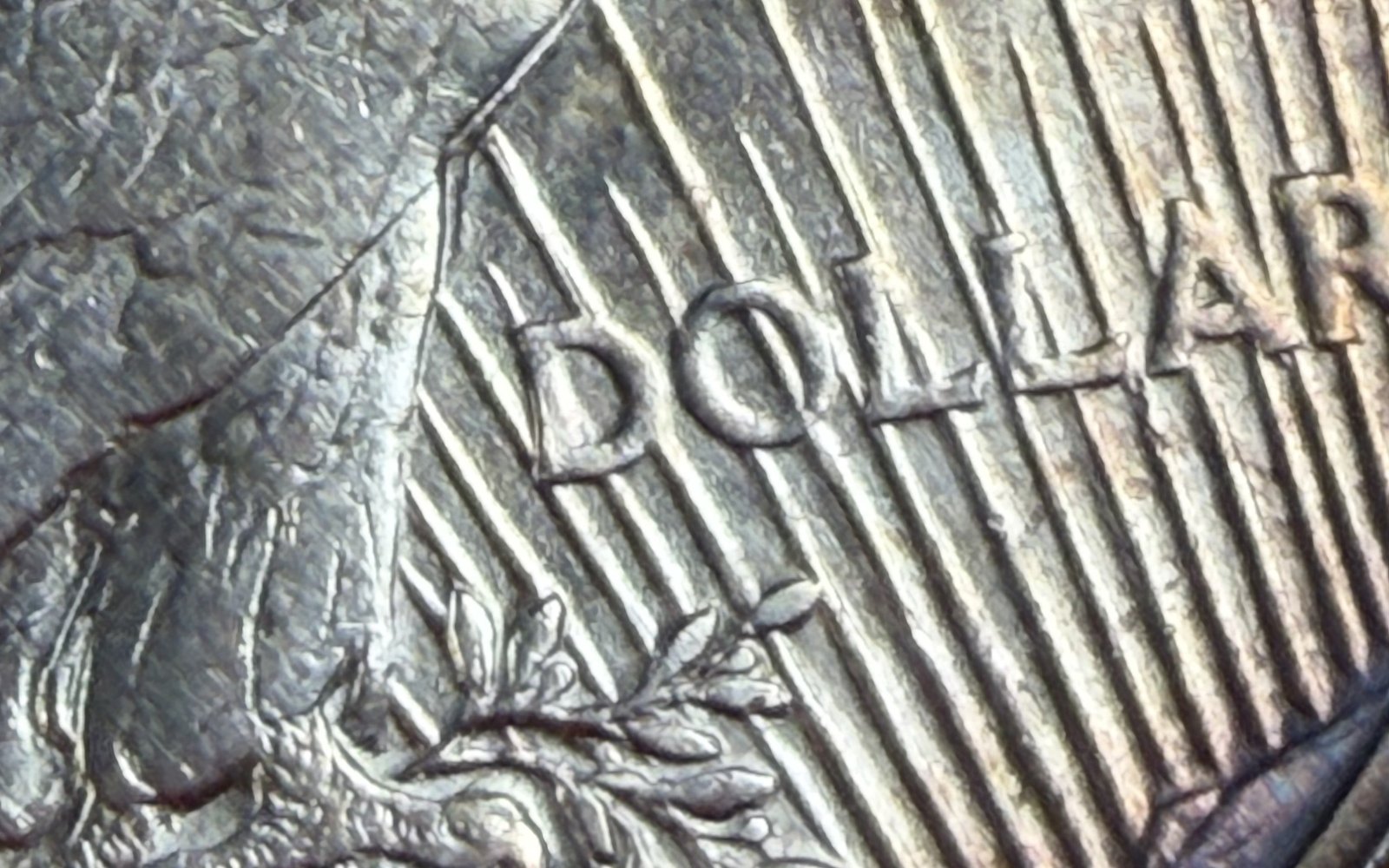
The coin in the photo is a 1921 Peace dollar, the first year of the design and the only one struck in high relief, and the colour running across the rays is exactly the kind of thing this post is about.
Toning is what happens when silver reacts with sulphur in the air over a long time. A thin film forms on the surface, and because that film is only a few hundred nanometres thick, it bends light the way oil on water does. Gold first, then russet, then blue, purple, magenta, and finally a dark grey when the film gets thick enough. On a coin that has sat undisturbed for fifty years the colour can be extraordinary, and collectors pay real money for it.
That premium is exactly why people fake it. A coin baked in an oven with a sulphur source, or left in a potato, or wiped with certain chemicals, will show colour in an afternoon. Artificially toned coins are worth less than untoned ones, because a grading service will bag them as Questionable Colour and refuse a straight grade. So the question on every toned coin is the same: did time do this, or did somebody?
What we look at
Where the colour sits. Natural toning follows the way air reached the coin. A coin in a cardboard album tones from the rim inward, in bands, where the sulphur in the paper touched it. A coin at the end of a tube tones on one side only. A coin in a felt-lined case tones evenly, edge to edge, and every coin in that case tones the same way. Artificial toning tends to ignore all of that: it’s even where it shouldn’t be, or bright where the coin’s own history says it should be dark.
The progression. Real toning moves through the colour sequence in order, gold to blue to purple, with the thin gold edge on the outside of every band. Fake toning skips steps, or shows purple and blue with no gold anywhere, or has a flat, painted look with no depth.
What’s underneath. Colour on top of lustre is the real thing: tilt the coin under a lamp and the cartwheel still spins through the colour. Colour on top of a dull, cleaned surface is a warning sign, because the usual reason to tone a coin artificially is to hide the fact that it was cleaned.
The story. We ask where the coin came from and how it was kept. Not because we take the answer on faith, but because a true story is consistent with the coin and a false one usually isn’t.
The mistake we made
This summer we bought a large estate lot that had sat in a barn for decades, and the first few coins we pulled out had colour so strong that we doubted it. We benchmarked them against album toning, the rim-to-centre pattern most collectors know, and called them suspicious. We were wrong. Barn storage, tube storage and felt cases all produce uniform, edge-to-edge or blotchy colour that looks nothing like an album coin and is every bit as natural. The lesson stuck: get the storage history first, then judge the coin against what that history should have produced.
What it means if you’re selling
If you have old silver with colour on it, don’t do anything to it. Don’t wipe it, don’t dip it, and don’t let anyone tell you it’s “tarnished” and needs cleaning. Bring it as it is. A toned coin with original surfaces is one of the few things in this business that can be worth more than the price guide says, and we’ll tell you honestly which side of the line yours falls on.
Coin & Co Numismatics, Kingston, Ontario. We buy, sell and value coins, and we photograph everything ourselves, unedited.